
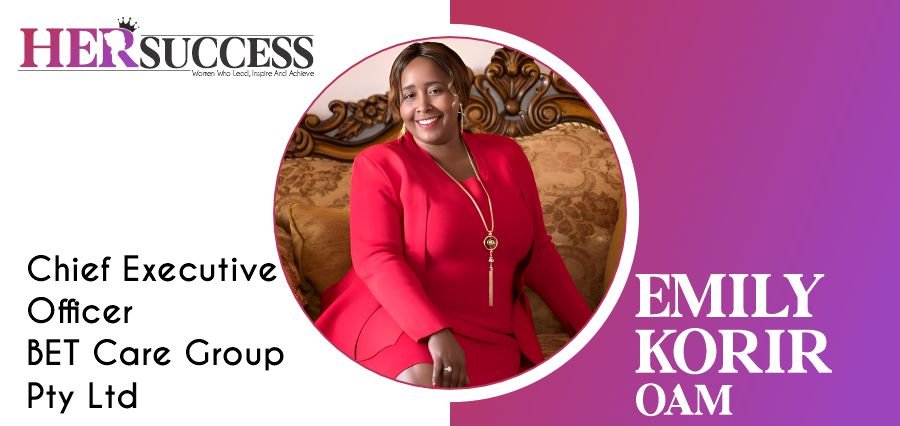
Driving Inclusive Community Support Through BET Foundation!
Across many regions, support systems for vulnerable groups remain fragmented. Services often exist, yet access remains uneven. People living with disabilities struggle with mobility and recognition. Women facing economic hardship carry responsibility without structured backing. Young people in disadvantaged settings grow up with limited pathways to education, skills, and safe employment. Programs sometimes arrive with good intent yet fade without continuity, local trust, or cultural understanding. The result leaves communities with short-term relief instead of stable progress.
Sustainable social support requires more than funding and outreach. It needs structure, cultural awareness, and leadership that treats dignity as a starting point rather than an afterthought. This is where Emily Korir places her work and energy. She serves as the Founder and CEO of BET Foundation, a non-profit organisation active across Australia and Africa, focused on inclusion, protection, and practical empowerment.
Her direction grew from lived experience and long years of grassroots community work. Direct exposure to poverty, disability barriers, and gender inequality shaped her understanding of how easily people lose access to essential services and fair opportunities. She approaches community development as enablement rather than dependency, which became the operating principle behind BET Foundation.
Through the BET Foundation, programs connect immediate care with long-term opportunity. Disability support, women’s empowerment initiatives, youth development, and community wellbeing projects operate through local participation and shared ownership. This method builds trust while strengthening results.
Her leadership style keeps ethics, accountability, and sustainability at the centre of every decision. Regional partnerships expand reach while local voices guide delivery. The mission stays clear and grounded. Every person deserves safety, respect, and a real chance to grow.
Recovery Rebuilt From the Ground Up
Severe medical setbacks often demand more than clinical treatment. They require personal skills that rebuild function step by step. Her recovery after a life-changing stroke reshaped how she understands strength and progress.
After her stroke at 37, relearning how to walk, speak, and read required far more than physical rehabilitation. It demanded deep mental, emotional, and personal resilience. One of the most important skills was determination.
Progress was often slow and frustrating, but she made a conscious decision to commit to recovery one step, one word, and one page at a time. She learned to celebrate small wins, understanding that consistency mattered more than speed.
Patience and self-compassion were equally critical. She had to accept where she was each day without losing sight of where she wanted to be. Letting go of perfection and allowing herself to relearn basic skills helped reduce fear and build confidence.
She also relied heavily on discipline and structure. Repetition, routine, and focus became essential tools. Practising daily, even when exhausted, helped retrain both her body and mind.
Finally, hope and purpose sustained her. She held onto a strong sense of why recovery mattered, not just for herself, but so she could continue to serve others, lead, and contribute meaningfully. That purpose gave her the strength to persist through setbacks and uncertainty.
Resilience at the Core of Leadership
Leadership pressure often exposes how a person handles uncertainty and disruption. Her leadership approach today is directly shaped by lived resilience rather than theory.
Resilience has fundamentally shaped how she leads today. It has taught her that challenges are rarely solved by force or urgency alone, but by clarity, persistence, and grounded decision-making, even under pressure.
Because of her lived experience, she approaches leadership challenges with calm rather than reactivity. She understands that setbacks, whether organisational, financial, or personal, are part of any meaningful mission. Instead of viewing obstacles as failures, she treats them as information signals that guide better strategy, stronger systems, and more compassionate leadership.
Resilience has also deepened her empathy and patience. She leads with an awareness that people perform best when they feel safe, supported, and understood. This shapes how she builds teams, manages change, and responds to mistakes, focusing on learning and accountability rather than blame.
Most importantly, resilience has reinforced her commitment to purpose-driven leadership. When things are difficult, she returns to the “why” behind the work. That perspective allows her to stay focused on long-term impact rather than short-term pressure, and to lead with steadiness, integrity, and hope.
Intuition Under Pressure
High-stakes decisions are not driven by numbers alone. Her decision style blends analysis with human signal reading and relational awareness.
When making high-stakes decisions, she relies on intuition and situational awareness, reading both data and the subtle human signals around her. She uses her femininity strategically, leading with empathy, collaboration, and relational intelligence to build trust and uncover perspectives others might miss.
This approach keeps her decisions ethical, human-centered, and sustainable.
Leadership Rooted in Upbringing
Early environments often form leadership instincts more than formal training. Her childhood in a Kenyan village under the care of two strong women still defines how she leads and serves.
Growing up in a Kenyan village, raised by two courageous women, her motherland and her grandmother, she learned early the value of strength, resilience, and empathy. Watching them navigate challenges with grace taught her that true leadership is not just about authority, but about understanding, supporting, and lifting others.
She stands on their shoulders, and today, through the BET Foundation, she is proud that they have saved 5,500 girls from FGM. She holds a clear conviction about collective impact: she leads with the belief that one voice can multiply across thousands of lives touched.
That foundation, rooted in empathy and lived example, shapes how she listens, connects, and makes decisions, ensuring that choices are guided by humanity, justice, and the voices of those she serves.
Disability Experience as Leadership Lens
Personal experience with disability can sharpen how leaders design inclusion and advocacy. Her daily work reflects lessons drawn directly from lived reality.
Her personal experience with disability has profoundly shaped how she approaches leadership and advocacy. It has taught her empathy, patience, and the importance of listening, which she applies daily in supporting communities, teams, and women in particular.
Wherever she is given a platform, she is vocal about disability and women’s issues, ensuring their voices are heard and valued. She also promotes the use of femininity as a strategic strength, positioning empathy, collaboration, and relational intelligence not just as personal qualities, but as practical tools for business, leadership, and social impact.
Voice Shaped by Hard Truths
Public advocacy around femininity and intuition in business often comes from lived contrast, not comfort. Her global speaking presence is grounded in personal history rather than branding.
She was born to a teenage mother who was raped at 13. That event brought shame to her family and clan, and she describes her own beginning as unseen, rejected at birth, and unheard. From that starting point, her platform today carries a broader purpose. She stands not just for herself, but for thousands of women whose voices remain silenced. Her message remains direct and unchanged in her own words:
“I stand not just for myself, but for thousands of women whose voices remain silenced. Women are still unseen, yet they hold immense power to lead, to create, to transform. My mission is to show that femininity and intuition are not weaknesses, but strategic strengths. When women embrace their authentic selves, they do more than survive; they thrive, lead, and reshape the world.”
That personal truth fuels how she presents femininity and intuition as operational strengths in leadership and enterprise spaces.
Turning Adversity Into Usable Strength
Personal hardship becomes useful only when it is translated into tools others can apply. Her method centers on structured storytelling and relational awareness.
One skill she has developed is translating personal adversity into empathy-driven storytelling. Experiencing a stroke and living with disability taught her resilience, patience, and perspective. Over time, she learned to share these experiences strategically, not to center hardship, but to guide and empower others facing their own barriers.
She combines this with active listening and relational insight. When she speaks or leads, she connects personally, reads individual struggle points, and offers actionable encouragement. This ability has turned her journey into a working platform for change, motivating teams, communities, and women to recognize their own capacity and direction.
Advocacy That Changes Conversations
Health advocacy becomes effective when it bridges lived experience with policy and leadership dialogue. Her stroke and brain injury advocacy shapes how she engages decision makers and communities.
Her advocacy for stroke and brain injury awareness directly influences how she works with leaders and communities. Because she personally experienced a stroke, she brings credibility, operational insight, and grounded empathy into these discussions. This allows her to connect policy, practice, and lived reality, helping leaders understand the human consequences behind formal decisions.
Within communities, this approach builds trust and openness and encourages practical action in prevention, support, and inclusion. Her advocacy focus is outcome-oriented. The intention is that people not only hear the issue, but respond to it in measurable ways.
Building Dignity Into Everyday Culture
Culture shifts do not happen through slogans. They grow from repeatable interpersonal skills and visible behaviors. Her approach focuses on practical habits that create dignity and possibility.
To foster cultures of dignity and possibility, she relies on several practical skills. First is active listening and empathy, creating space for people to be heard, understood, and valued, which builds psychological safety. Second is mentorship and capacity building, where she equips people with tools, knowledge, and confidence to take ownership of their goals.
She also models resilience and integrity through persistence, accountability, and ethical decision-making, demonstrating that challenges can be used for growth rather than avoidance. Inclusive communication and recognition are applied consistently, celebrating contribution and encouraging collaboration so people see their role in shared purpose. Together, these practices create environments where people feel respected, capable, and ready to act.
Education That Strengthened Execution
Formal study can sharpen impact when it connects directly to mission work. Her advanced degrees strengthened both operational scale and policy precision.
Earning her MBA and Graduate Diploma in Disability Policy sharpened her leadership across multiple dimensions. The MBA strengthened her strategic thinking, financial judgment, and organisational management capability, enabling her to run BET Foundation efficiently and expand impact across Australia and Africa.
The Graduate Diploma in Disability Policy deepened her sector expertise and improved her ability to translate policy into practical programs that respond to real disability needs. Together, these qualifications strengthened her ability to combine big picture vision with evidence-based execution while keeping decisions human-centered and socially responsible.
Recognition Earned Through Measurable Impact
Major recognitions in social leadership usually follow sustained field results rather than visibility alone. Her honors connect directly to consistent execution and community outcomes.
The core talent she credits behind recognitions such as the Order of Australia Medal is the ability to turn vision into tangible social impact through consistent action. By combining resilience, empathy, and strategic leadership, she addresses gender-based violence, FGM, and disability exclusion through sustained programs rather than short campaigns.
That consistency supports effective program delivery, voice amplification, and life level transformation. Through the BET Foundation, that work continues to expand. The organization is building Kenya’s first fully accessible respite centre for children with disabilities, with groundbreaking scheduled for December 2025, while continuing to mentor the 5,500 girls saved from FGM and extending protection efforts further
Period poverty remains a silent yet devastating barrier for many girls and women, particularly in vulnerable communities. As we continue the critical fight to end female genital mutilation (FGM), we must also go beyond protection and address the everyday challenges that push girls out of school and into early marriage. The lack of access to safe, hygienic sanitary pads forces many girls to miss classes during their menstrual cycles, leading to poor academic performance, shame, and eventual school dropout.
This interruption in education increases their risk of early marriage and harmful practices, perpetuating a cycle of inequality and poverty. By ensuring access to hygienic menstrual products, we empower girls to stay in school, protect their dignity, and strengthen our collective efforts to safeguard their rights, health, and future.
Her public invitation remains open and direct in intent: support, partnership, and shared responsibility are required to extend that impact across more communities.




We started because too many brilliant wins stayed hidden. Too many stories ended before they began. We decided that had to change. Her Success shines a light on women from every walk of life, from female leaders to women entrepreneurs, who dared to dream, fought to build, and pushed until their world expanded.